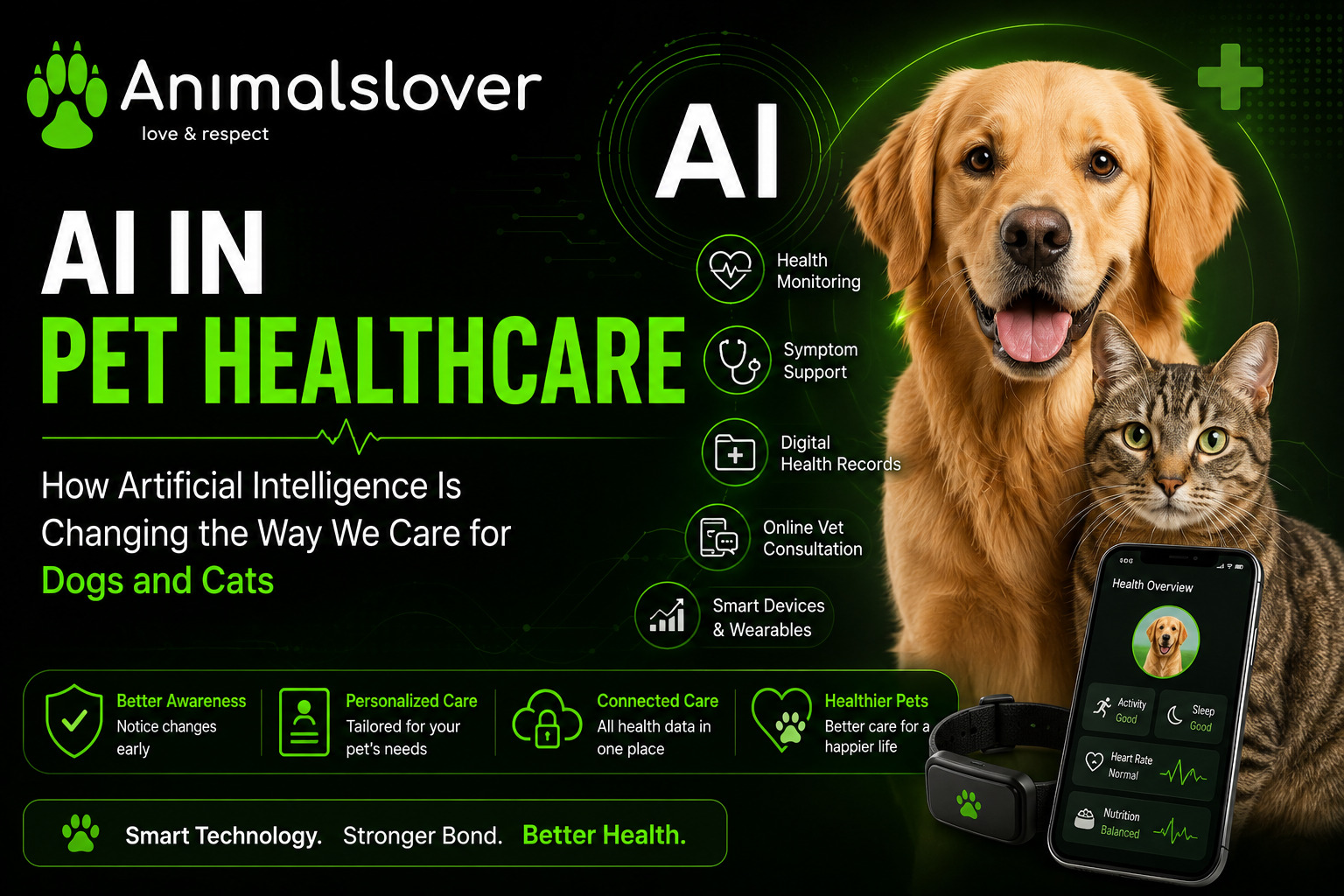
AI in Pet Healthcare: How Artificial Intelligence Is Changing the Way We Care for Dogs and Cats
17 Aug 2026
Discover how AI is transforming pet healthcare through health monitoring, symptom support, digital records, telemedicine, smart devices, and personalized pet care.
Pet care is becoming increasingly connected to technology.
From smart collars and activity trackers to online veterinary consultations and digital health records, pet parents now have more tools than ever to understand and manage their pets' everyday needs.
One of the most exciting developments is Artificial Intelligence (AI) in pet healthcare.
AI has the potential to help pet parents recognize changes in behavior, organize health information, monitor activity, understand basic health concerns, and communicate more effectively with veterinary professionals.
But AI is not a replacement for a veterinarian.
Instead, the most useful role of AI is to act as an additional layer of support between routine pet care and professional veterinary treatment.
In this guide, we'll explore how AI is being used in pet healthcare, what it can realistically do today, its benefits and limitations, and what the future could look like.
What Is AI in Pet Healthcare?
Artificial Intelligence refers to computer systems designed to analyze information, recognize patterns, generate responses, and assist with decision-making.
In pet care, AI can work with different types of information, including:
- Pet photos
- Videos
- Activity data
- Eating and drinking patterns
- Weight records
- Health histories
- Symptoms reported by owners
- Veterinary records
- Wearable-device data
- Behavioral changes
For example, an AI-powered pet-care platform may help an owner organize symptoms and health information before speaking with a veterinarian.
Another system may analyze activity data from a smart collar and identify changes compared with a pet's normal routine.
The important point is that AI should generally be viewed as a support tool, not as an independent veterinary authority.
How Can AI Help Pet Parents?
AI can potentially make several areas of pet care easier.
1. Monitoring Changes in Pet Behavior
Pets cannot tell us when something feels wrong.
Instead, owners often have to recognize changes in behavior.
For example, a dog that normally plays for an hour may suddenly become inactive. A cat that normally uses its litter box consistently may begin behaving differently.
AI systems can potentially help identify unusual patterns when enough reliable data is available.
Possible signals include:
- Reduced activity
- Changes in sleeping patterns
- Changes in eating behavior
- Increased scratching
- Changes in movement
- Unusual vocalization
- Changes in bathroom habits
- Reduced interaction
A single unusual event doesn't necessarily mean a pet is sick.
But repeated changes from an established baseline can be useful information to discuss with a veterinarian.
2. AI-Powered Pet Health Support
One emerging application is AI-assisted health guidance.
A pet parent may describe symptoms such as:
"My dog has been scratching more than usual and has developed a small red area on the skin."
An AI system can help organize the information, explain possible categories of concern, and suggest what information might be useful to collect.
For example, it might encourage the owner to note:
- When the problem started
- Whether it is getting worse
- Whether the pet is eating normally
- Whether there are other symptoms
- Whether there was a recent food or environmental change
- Whether the pet has received recent veterinary care
This can make conversations with veterinary professionals more organized.
However, AI-generated information should not be treated as a confirmed diagnosis.
Skin irritation, for example, can have many different causes that require proper examination.
Can AI Analyze a Pet's Photo?
Computer vision technology can analyze images and identify visual patterns.
In pet healthcare, image-based AI may eventually assist with areas such as:
- Skin appearance
- Visible wounds
- Eye abnormalities
- Dental appearance
- Body condition
- Coat changes
- Visible swelling
- Movement patterns
However, there is an important limitation.
A photograph only shows what is visible.
It cannot reliably reveal everything happening inside an animal's body.
For example, a pet may look normal in a photograph while experiencing pain, infection, digestive disease, or another internal problem.
Therefore, image-based AI should be treated as an early information and awareness tool, not a substitute for physical examination.
AI and Online Veterinary Consultation
Telemedicine has already made veterinary support more accessible in many situations, and AI could make the process more efficient.
Imagine a pet parent completing an AI-assisted questionnaire before an online veterinary consultation.
The system could organize information such as:
- Age
- Breed
- Weight
- Symptoms
- Duration of symptoms
- Current medications
- Previous health conditions
- Vaccination information
- Recent dietary changes
- Behavioral changes
Instead of spending the first part of a consultation collecting basic information, the veterinarian could potentially start with a more structured overview.
This could improve communication and help pet parents explain their concerns more clearly.
However, whether an online consultation is appropriate depends on the situation. Emergencies and conditions requiring physical examination should be handled through appropriate veterinary services.
AI for Digital Pet Health Records
Another important application is the organization of pet health information.
Pet parents may have vaccination records in one place, prescriptions somewhere else, laboratory reports in email, and previous veterinary information stored on paper.
A digital pet health profile can bring important information together.
AI can potentially help organize and summarize:
- Vaccination history
- Veterinary visits
- Medication information
- Weight history
- Allergies
- Previous illnesses
- Test reports
- Grooming history
- Dietary information
Having organized information can be especially useful when visiting a new veterinarian.
Instead of trying to remember everything, the owner can provide a structured health history.
AI and Preventive Pet Care
One of the biggest opportunities for AI may be preventive care.
Traditional pet care often focuses on responding when a problem becomes obvious.
Technology can potentially help owners pay attention to gradual changes before they become more noticeable.
For example, imagine a smart device tracking a dog's daily activity.
If the dog's activity gradually decreases over several weeks, the system could flag the change for the owner.
That does not mean the dog is sick.
The decrease could be caused by:
- Hot weather
- Aging
- A change in routine
- Less outdoor activity
- Recovery from exercise
- Pain or illness
But the change is worth noticing.
This is where AI can be useful: helping owners notice patterns that they might otherwise overlook.
Smart Collars and Wearable Technology
Wearable technology is becoming increasingly relevant to modern pet care.
Depending on the device, smart collars and trackers can collect information such as:
- Activity
- Location
- Rest
- Movement
- Heart-related metrics on some devices
- Temperature-related information on some systems
AI can then analyze trends rather than simply displaying raw numbers.
For example:
Raw data:
Your dog was active for 4 hours yesterday.
AI-supported interpretation:
Your dog's activity has been consistently lower than its recent average.
The second type of information can be easier for pet parents to understand.
But wearable devices are not perfect.
Sensor accuracy can vary, and unusual readings should be interpreted carefully rather than treated as medical facts.
AI for Personalized Pet Care
Every pet is different.
A Chihuahua and a Great Dane don't have the same nutritional, exercise, or lifestyle requirements.
Similarly, a senior cat needs different care from a young kitten.
AI can potentially help personalize recommendations using information such as:
- Species
- Breed
- Age
- Weight
- Activity level
- Lifestyle
- Existing health information
- Dietary preferences
- Environmental factors
This could eventually make pet-care recommendations more personalized than generic advice.
For example, an AI system could help create a daily routine that combines:
Exercise + feeding + grooming + medication reminders + mental stimulation + veterinary follow-ups
The goal is not to replace professional expertise but to make everyday pet parenting more organized.
AI Can Help With Pet Nutrition Too
Nutrition is another area where technology can assist pet parents.
AI-powered systems may help owners understand:
- Feeding schedules
- Portion information
- Ingredient lists
- Calorie considerations
- Food transitions
- Treat frequency
- Weight-management goals
However, nutrition recommendations should be approached carefully.
A pet with kidney disease, diabetes, allergies, gastrointestinal disease, or another medical condition may require a specific veterinary nutrition plan.
AI should never override professional dietary advice for a pet with a medical condition.
AI and Pet Training
AI isn't limited to healthcare.
It can also support training and behavior management.
For example, an AI assistant could help an owner create a training routine for:
- Potty training
- Basic obedience
- Leash walking
- Puppy biting
- Excessive barking
- Separation-related behavior
- Recall training
- Socialization
An owner could describe a problem and receive structured training suggestions.
For example:
Problem: Puppy repeatedly bites hands during play.
An AI assistant might suggest:
- Redirecting the puppy toward an appropriate toy.
- Avoiding rough hand-based play.
- Reinforcing calm behavior.
- Providing adequate sleep and mental stimulation.
- Maintaining consistency across family members.
However, serious aggression, severe anxiety, or dangerous behavioral problems should involve a qualified veterinary behaviorist or experienced professional.
Benefits of AI in Pet Care
AI could provide several important benefits.
Better Awareness
AI can help pet parents notice changes in their pet's routine.
Better Organization
Digital tools can keep health information in one place.
Faster Access to Information
Owners can quickly find educational information about common pet-care questions.
Personalized Support
AI can adapt information based on a pet's age, breed, lifestyle, and available data.
Better Veterinary Communication
Structured health summaries can help owners communicate more effectively with veterinarians.
Preventive Focus
Tracking trends may encourage owners to investigate changes earlier.
What AI Cannot Do
This is one of the most important sections for responsible pet parents.
AI cannot replace a veterinarian.
AI cannot reliably:
- Perform a physical examination
- Listen to the heart and lungs
- Palpate the abdomen
- Perform surgery
- Take laboratory samples
- Interpret every medical situation accurately
- Guarantee a diagnosis from a photograph
- Replace emergency veterinary care
Even highly advanced AI can make mistakes.
A pet's health depends on physical examination, medical history, diagnostic testing, professional judgment, and sometimes repeated observation.
AI should therefore be treated as an assistant—not the doctor.
When Should You Contact a Veterinarian?
Pet owners should seek professional veterinary care when they notice concerning symptoms, especially when symptoms are severe, persistent, worsening, or unusual for the individual animal.
Urgent situations may include:
- Difficulty breathing
- Collapse
- Severe bleeding
- Seizures
- Suspected poisoning
- Severe injury
- Inability to urinate
- Serious allergic reactions
- Loss of consciousness
- Extreme weakness
- Other signs of a medical emergency
In such situations, don't spend time relying on an AI chatbot for diagnosis.
Contact an appropriate veterinary service immediately.
The Future of AI Pet Healthcare
The future could be much more connected than today's pet-care experience.
Imagine a pet having a continuously updated digital health profile containing:
- Activity patterns
- Weight history
- Vaccination records
- Veterinary visits
- Medication information
- Nutrition data
- Behavioral patterns
- Wearable-device information
AI could analyze changes over time and highlight information that may deserve attention.
For example:
"Your dog's activity has decreased consistently over the last two weeks."
That simple notification could encourage the owner to investigate the change.
Future systems may also become better at combining different types of information instead of analyzing each data source separately.
The real opportunity is not simply "AI diagnosing pets."
It is creating a more connected system where pet parents, veterinarians, technology, and health information work together.
How Pet Parents Should Use AI Responsibly
If you're using AI for pet care, follow a few simple principles.
Use AI for Education
Use it to understand basic concepts and prepare questions.
Use It to Organize Information
Keep your pet's health history, symptoms, and observations structured.
Don't Treat AI as a Diagnosis
AI suggestions are not the same as veterinary diagnosis.
Verify Important Information
Especially for medication, nutrition, poisoning, and serious health concerns.
Contact a Veterinarian When Necessary
Technology should make veterinary care easier—not replace it.
Frequently Asked Questions
Can AI diagnose my dog's illness?
AI may help organize symptoms and provide educational information, but it should not be treated as a definitive diagnosis. A veterinarian should evaluate health concerns that require professional assessment.
Can AI analyze my pet's photo?
Some AI systems can analyze visible features in pet images, but photographs have significant limitations. A photo cannot provide a complete medical assessment.
Is AI safe for pet healthcare?
AI can be useful when treated as an informational and support tool. It becomes risky when owners rely on it instead of professional veterinary care for serious conditions.
Can AI monitor my dog's health?
AI-powered platforms and wearable devices can potentially monitor activity and other measurable patterns. Changes should be interpreted in context and discussed with a veterinarian when concerning.
Can AI help with dog training?
Yes. AI can provide general training ideas, routines, and educational guidance. Serious behavioral problems should be assessed by qualified professionals.
Will AI replace veterinarians?
AI is more likely to become a support tool for pet parents and veterinary professionals than a replacement for veterinarians. Physical examination, diagnostic testing, clinical judgment, and hands-on treatment remain essential.
Conclusion
AI is changing pet care—but its greatest value may not be replacing veterinarians.
Instead, AI can help pet parents become more informed, organized, and aware of changes in their animals.
From digital health records and wearable devices to AI-assisted symptom education and personalized care recommendations, technology can make everyday pet parenting more connected.
But responsible pet care still starts with something technology cannot replace:
paying attention to your pet.
If your dog suddenly becomes inactive, your cat stops eating, or your pet behaves differently, technology may help you organize the information—but professional veterinary care remains the right next step when something seems wrong.
The future of pet healthcare will likely be a combination of pet parents + veterinarians + technology + better health data.
And when those pieces work together responsibly, pets can benefit from earlier awareness, better care, and a healthier everyday life.
Take the Next Step With AnimalsLover
At AnimalsLover, we believe technology should make pet parenting easier—not more confusing.
Explore our pet-care resources for information about dog health, cat care, nutrition, grooming, training, breeds, and modern pet services.
Because better information can help us give our pets better care, every day.
This article is for general educational purposes only and is not a substitute for veterinary diagnosis, treatment, or professional medical advice. If your pet is experiencing a serious or potentially life-threatening problem, contact a veterinarian or emergency veterinary service immediately.
🐾 Did you enjoy this article?
Explore more pet care tips, breed guides and expert advice on our blog. For pet-related questions, contact our team.