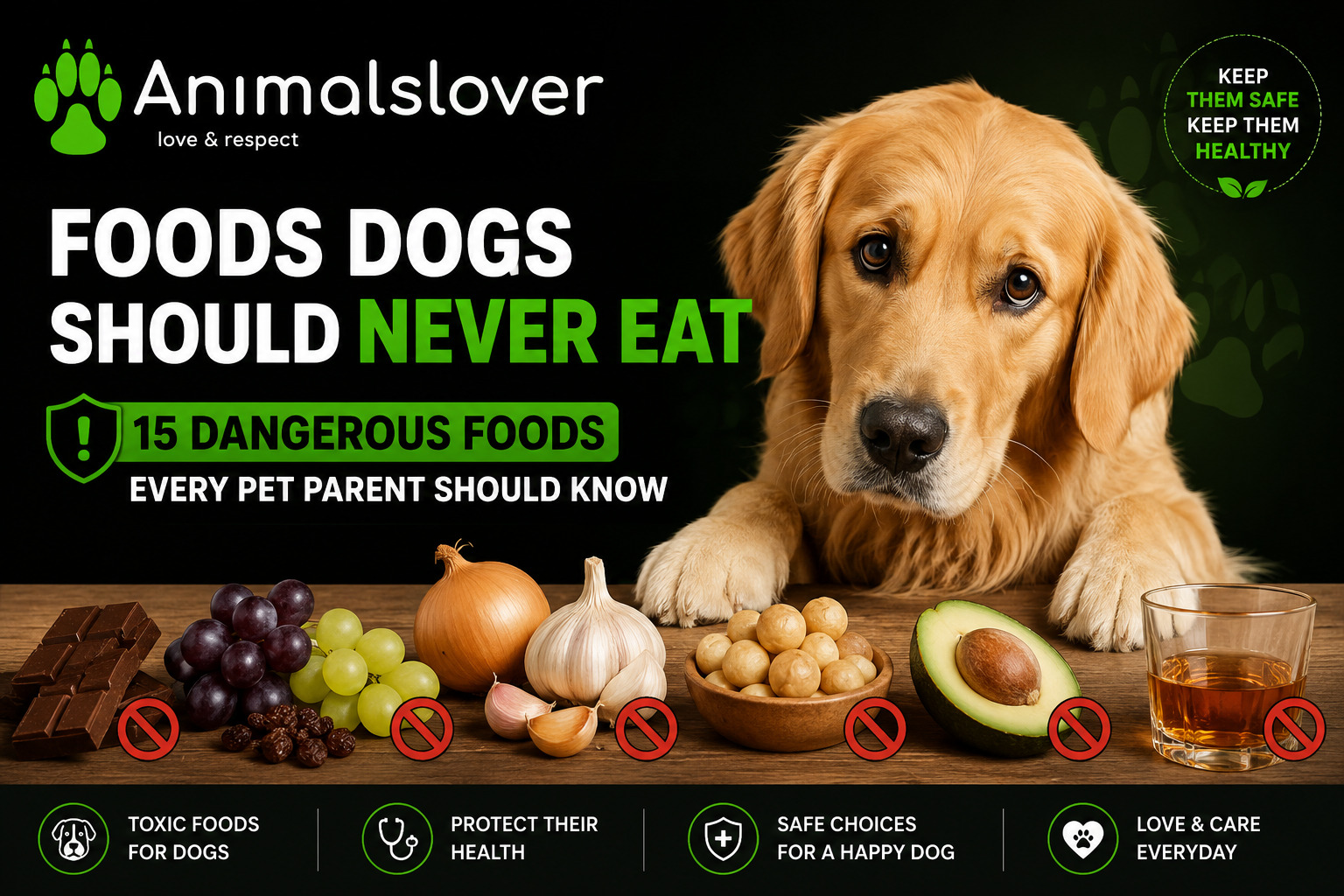
Foods Dogs Should Never Eat: 15 Dangerous Foods Every Pet Parent Should Know
15 Aug 2026
Learn which foods dogs should never eat, including chocolate, grapes, raisins, xylitol, onions, garlic, macadamia nuts, alcohol and other dangerous foods.
Foods Dogs Should Never Eat: 15 Dangerous Foods Every Pet Parent Should Know
Dogs are naturally curious, and many will happily investigate anything that smells like food. That can become a serious problem because some foods that are perfectly normal for humans can be harmful—or even life-threatening—to dogs.
Knowing what foods dogs should never eat is an important part of responsible pet care. Chocolate, grapes, raisins, onions, garlic, xylitol, alcohol, and certain nuts are among the foods that can cause serious problems in dogs. The ASPCA continues to identify foods and drinks such as grapes, raisins, xylitol-containing products, onions, garlic, and chocolate among important pet toxin concerns.
The good news is that most food-related accidents can be prevented with simple precautions: keep dangerous foods out of reach, check ingredient labels, secure the garbage, and teach your dog a reliable "leave it" command.
Here are 15 foods and food-related items that should not be given to dogs, along with what makes them risky and what to do if your dog accidentally eats one.
1. Chocolate
Chocolate is one of the best-known foods that dogs should avoid.
It contains methylxanthines, including theobromine and caffeine, which dogs process differently from humans. Depending on the type and amount consumed, chocolate can cause vomiting, diarrhea, restlessness, abnormal heart activity, tremors, seizures, and potentially life-threatening illness. Dark chocolate and cocoa products generally pose a greater risk because they contain higher concentrations of these compounds.
Keep these away from your dog:
- Dark chocolate
- Baking chocolate
- Cocoa powder
- Milk chocolate
- Chocolate desserts
- Chocolate candies
- Chocolate-containing baked goods
If your dog eats chocolate, don't wait for symptoms before contacting a veterinarian. The risk depends on factors such as the type and amount of chocolate and the dog's size.
2. Grapes and Raisins
Grapes and raisins can cause serious illness in dogs, including kidney damage. The exact toxic mechanism has been investigated, but the important point for owners is that grapes and raisins should be treated as unsafe foods for dogs.
They can be found in foods you may not immediately associate with grapes, such as:
- Trail mixes
- Raisin breads
- Cereals
- Cookies
- Cakes
- Some snack products
Don't assume that removing the visible raisins from a food makes the rest safe.
If your dog has eaten grapes or raisins, contact your veterinarian promptly.
3. Xylitol
Xylitol deserves special attention because it can be hidden in everyday products.
Xylitol is a sweetener used in some:
- Sugar-free chewing gum
- Sugar-free candies
- Mints
- Baked goods
- Toothpaste
- Mouthwash
- Some medicines
- Some supplements
- Certain peanut and nut butters
- Sugar-free desserts
In dogs, xylitol can trigger a rapid release of insulin, causing a potentially dangerous drop in blood sugar. Severe poisoning can also involve liver injury, seizures, collapse, and other serious complications.
Important label tip
Don't look only for the word "sugar-free."
Check the ingredient list for xylitol. It may also be described as birch sugar or wood sugar.
If you suspect your dog has eaten xylitol, treat it as an emergency and contact a veterinarian or emergency animal hospital immediately.
4. Onions
Onions can damage a dog's red blood cells and may lead to anemia.
The risk isn't limited to raw onions. Dogs should also avoid:
- Cooked onions
- Fried onions
- Onion powder
- Onion-containing sauces
- Onion seasoning
- Foods prepared with significant amounts of onion
Onion powder can be particularly easy to overlook because it may be included in processed foods, soups, sauces, and seasoning mixes.
Because symptoms can sometimes be delayed, a dog that appears normal immediately after eating onions may still need veterinary assessment.
5. Garlic
Garlic belongs to the same Allium family as onions, leeks, and chives and can also damage red blood cells.
Garlic can be present in:
- Cooked food
- Sauces
- Gravies
- Seasoning powders
- Supplements
- Leftovers
The ASPCA lists onions, garlic, and chives among foods that can cause gastrointestinal irritation and red blood cell damage in dogs.
Never assume that a small amount of seasoned human food is automatically safe simply because the main ingredient appears harmless.
6. Macadamia Nuts
Macadamia nuts are toxic to dogs and can cause symptoms such as weakness, vomiting, lethargy, tremors, difficulty walking, and elevated body temperature.
They can be particularly easy for dogs to access during:
- Parties
- Baking
- Snack time
- Mixed-nut servings
- Cookies and desserts
Keep both plain macadamia nuts and foods containing them away from pets.
7. Alcohol
Dogs should never be given alcohol.
Alcohol can be found in more places than just drinks. Certain desserts, sauces, fermented products, and cocktails may contain alcohol as well.
Dogs are much smaller than humans, so even relatively small amounts can be dangerous.
Possible signs of alcohol poisoning can include:
- Vomiting
- Weakness
- Poor coordination
- Depression
- Breathing problems
- Tremors
- Severe illness
Never intentionally offer beer, wine, spirits, cocktails, or alcohol-containing foods to a dog.
8. Cooked Bones
Bones may look like a natural treat for dogs, but cooked bones can be dangerous.
Cooked bones can splinter and create choking hazards or cause injuries to the mouth, throat, stomach, or intestines. The AKC specifically warns against giving dogs cooked bones.
This is particularly relevant after meals.
A dog may try to grab:
- Chicken bones
- Mutton bones
- Fish bones
- Rib bones
- Leftover cooked meat bones
Instead of giving table scraps containing bones, use veterinarian-recommended dog-safe treats.
9. Very Fatty or Fried Foods
Not every dangerous food causes poisoning.
Very fatty or greasy foods can cause digestive problems and may contribute to serious gastrointestinal disease, including pancreatitis in susceptible dogs.
Examples include:
- Deep-fried foods
- Greasy meat
- Large amounts of butter
- Fatty leftovers
- Fried snacks
- Rich sauces
- Heavy gravies
Even if a particular food isn't technically toxic, that doesn't mean it belongs in your dog's diet.
A dog's regular diet should be complete and balanced for its life stage, while human foods—when appropriate—should generally remain occasional treats.
10. Very Salty Foods
Dogs need sodium, but excessive salt can be dangerous.
Examples of foods to avoid sharing in large amounts include:
- Chips
- Pretzels
- Highly salted snacks
- Salted nuts
- Processed meats
- Very salty leftovers
Excessive salt exposure can cause vomiting, diarrhea, increased thirst, tremors, and seizures in severe cases.
Instead of sharing salty snacks, choose an appropriate dog treat.
11. Coffee and Other Caffeinated Products
Caffeine is not suitable for dogs.
Keep away from your dog:
- Coffee
- Coffee grounds
- Espresso
- Energy drinks
- Caffeinated tea
- Caffeine-containing supplements
- Certain caffeine-containing foods
Caffeine and related stimulants can cause serious effects in dogs. Chocolate is also dangerous partly because it contains methylxanthines such as caffeine and theobromine.
Never let your dog lick the bottom of a coffee cup or access used coffee grounds.
12. Foods Containing Artificial Sweeteners
Xylitol is the major concern, but the bigger lesson is to check the ingredient list before sharing human food.
Sugar-free products can include:
- Chewing gum
- Candy
- Desserts
- Baked goods
- Peanut butter
- Supplements
- Oral-care products
The FDA specifically warns that xylitol may be present in products that pet owners don't immediately think of as dangerous to dogs.
When in doubt, don't share the food until you have checked the ingredients.
13. Avocado
Avocado is complicated because the flesh, pit, skin, and other plant parts don't present exactly the same risks.
The ASPCA and AKC advise caution, and the pit also presents a physical obstruction risk if swallowed. Avocado flesh is high in fat and can cause gastrointestinal upset in dogs when consumed in excessive amounts.
For a simple household rule, it is better to avoid giving your dog avocado products unless your veterinarian has specifically advised that a particular preparation is appropriate.
14. Cherries and Certain Fruit Pits
Some fruits can be healthy treats for dogs when prepared correctly, but their pits, seeds, stems, or other plant parts can create toxicity or choking/obstruction concerns.
Cherries are one example. The plant material around the fruit contains compounds that can be dangerous, while the pit itself can create an obstruction hazard.
This is why simply asking "Is this fruit safe for dogs?" isn't always enough.
You should also ask:
Which part of the fruit is safe, and how should it be prepared?
15. Spoiled or Moldy Food
Dogs may happily investigate food that humans would immediately throw away.
Spoiled or moldy food can contain harmful bacteria or toxins, and eating garbage can lead to gastrointestinal illness or more serious problems.
Common risky sources include:
- Open garbage bins
- Spoiled leftovers
- Moldy bread
- Rotten food
- Compost
- Food discarded outdoors
Food poisoning in dogs can produce symptoms such as vomiting and diarrhea, but gastrointestinal symptoms can have many different causes.
A secure, pet-proof garbage bin is one of the simplest ways to prevent these accidents.
What Human Foods Can Dogs Safely Eat?
Not every human food is dangerous for dogs.
Some foods can be appropriate as occasional treats when prepared simply and given in suitable portions.
Examples can include:
- Carrots
- Green beans
- Blueberries
- Apples without seeds
- Bananas
- Cucumber
- Plain cooked meat without harmful seasonings
The AKC notes that some fruits and vegetables can be suitable for dogs when properly prepared and fed in moderation.
The important principle is plain, appropriate, and moderate.
Avoid adding:
- Salt
- Sugar
- Spices
- Onion
- Garlic
- Excess oil
- Butter
- Harmful sauces
And remember that treats should not replace a complete and balanced diet.
How to Prevent Accidental Food Poisoning
Preventing access is much easier than dealing with an emergency.
1. Keep Dangerous Foods Out of Reach
Use closed cabinets or containers for:
- Chocolate
- Candy
- Nuts
- Sugar-free products
- Alcohol
- Raisins
- Other potentially dangerous foods
2. Check Ingredient Labels
Don't assume a product is safe just because it doesn't look dangerous.
Especially check sugar-free foods and nut butters for xylitol.
3. Secure Your Garbage
Many dogs will search through garbage when given the opportunity.
Use a sturdy, pet-resistant bin and avoid leaving food waste exposed.
4. Teach "Leave It"
A well-trained leave it command can prevent your dog from eating something dangerous that falls on the floor.
Practice it regularly in controlled situations rather than waiting for an emergency.
5. Tell Everyone in the Household
Children and visitors may not know which foods are unsafe for dogs.
Make sure everyone understands that feeding a dog from the table isn't always harmless.
What Should You Do If Your Dog Eats a Dangerous Food?
If your dog has eaten something potentially toxic, don't wait for symptoms to appear before seeking professional advice.
Your response should be:
- Remove any remaining food from your dog's reach.
- Identify what your dog ate.
- Estimate approximately how much was consumed.
- Note when it happened.
- Keep the product packaging or ingredient label if available.
- Contact your veterinarian or an emergency veterinary clinic.
- Follow the veterinarian's instructions.
For suspected xylitol exposure in particular, the FDA advises immediate contact with a veterinarian, emergency clinic, or animal poison-control service.
Do not induce vomiting or give home remedies unless a veterinary professional specifically tells you to do so.
The appropriate response can depend on the substance, amount, timing, dog's size, and medical history.
Common Signs of Possible Food Poisoning or Toxic Exposure
Depending on the substance involved, signs can include:
- Vomiting
- Diarrhea
- Excessive drooling
- Weakness
- Lethargy
- Loss of coordination
- Tremors
- Abnormal behavior
- Increased thirst
- Difficulty walking
- Collapse
- Seizures
Some toxic exposures can cause delayed signs, so the absence of immediate symptoms does not necessarily mean everything is fine.
If you know your dog has eaten a potentially toxic substance, contact a veterinarian rather than waiting for symptoms.
A Simple Rule for Dog Parents
When you're unsure whether your dog can eat something, use this simple rule:
Don't share it until you've checked whether it's safe for dogs.
Dogs don't understand which foods are dangerous. Their curiosity is your responsibility to manage.
A few seconds of checking an ingredient label can prevent a serious emergency.
Frequently Asked Questions
What is the most dangerous food for dogs?
There isn't one single food that is equally dangerous in every situation. Risk depends on the substance, amount consumed, dog's size, and other factors. Xylitol, chocolate, grapes, raisins, onions, garlic, and macadamia nuts are among the foods that require serious caution.
Can dogs eat chocolate?
No. Chocolate should not be given to dogs because it contains methylxanthines that can cause serious illness.
Can dogs eat grapes?
Grapes and raisins should be avoided because they can cause serious kidney injury in dogs.
Can dogs eat peanut butter?
Some peanut butter can be suitable in small amounts, but always check the ingredient label for xylitol and avoid products containing it.
Can dogs eat onions or garlic?
Dogs should not be given onions, garlic, leeks, or chives. These Allium plants can damage red blood cells and cause anemia.
Can dogs eat cooked bones?
Cooked bones should not be given to dogs because they can splinter and cause choking or internal injuries.
What should I do if my dog ate something toxic?
Contact your veterinarian or an emergency veterinary clinic promptly. Keep the product packaging available and provide information about what was eaten, approximately how much, and when it happened.
Should I make my dog vomit after eating something dangerous?
Do not induce vomiting unless a veterinary professional specifically instructs you to do so. The correct response depends on the substance and circumstances.
Final Thoughts
Knowing which foods dogs should never eat is one of the simplest ways to make your home safer for your pet.
Chocolate, grapes, raisins, xylitol, onions, garlic, macadamia nuts, alcohol, cooked bones, and other risky foods should be kept away from dogs. But prevention isn't only about memorizing a list—it is also about checking labels, securing garbage, supervising your dog, and teaching good habits.
Your dog may not know the difference between a safe treat and a dangerous snack.
You do.
That makes food safety an important part of responsible pet parenting.
Stay Informed With AnimalsLover
At AnimalsLover, we believe better information leads to better pet care.
Explore our dog health, nutrition, grooming, training, breed, and pet-care resources to help you make safer and more informed decisions for your companion.
Because your pet depends on you to know what they can't.
This article is for general educational purposes and does not replace veterinary advice. If you believe your dog has eaten a potentially toxic substance, contact a veterinarian or emergency veterinary service promptly.
🐾 Did you enjoy this article?
Explore more pet care tips, breed guides and expert advice on our blog. For pet-related questions, contact our team.