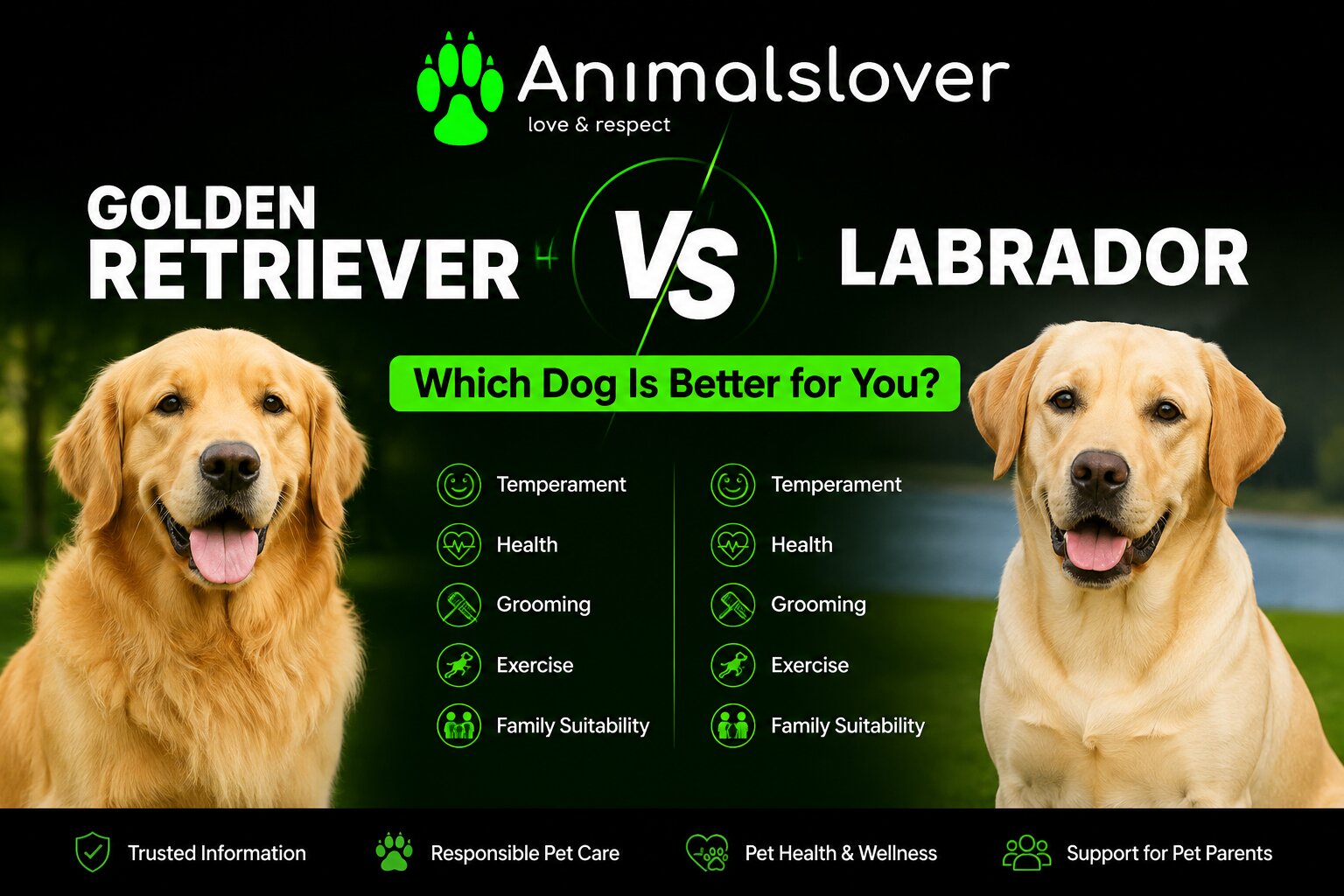
Golden Retriever vs Labrador: Which Dog Is Better for You?
14 Aug 2026
Golden Retriever vs Labrador: Compare temperament, size, exercise, grooming, training, health, shedding, and family suitability to find the right dog for your lifestyle.
Golden Retriever vs Labrador is one of the most common comparisons for people trying to choose the right family dog.
At first glance, the two breeds can look very similar. Both are medium-to-large sporting dogs, both are generally friendly and highly trainable, and both can be wonderful companions for active families. They also share a history as retriever dogs and tend to enjoy activities such as fetch, swimming, outdoor adventures, and training.
But they are not the same breed.
Their coats, appearance, exercise needs, grooming requirements, personality tendencies, and some health considerations are different. The better choice therefore depends less on which breed is "best" and more on which breed fits your lifestyle better.
Let's compare Golden Retrievers and Labradors in the areas that matter most to pet parents.
Golden Retriever vs Labrador: Quick Comparison
FeatureGolden RetrieverLabrador RetrieverGeneral temperamentFriendly, affectionate, devotedFriendly, outgoing, energeticSizeMedium to largeMedium to largeCoatLonger, feathered double coatShort, dense double coatSheddingModerate to heavyModerate to heavyGroomingHigherGenerally easierEnergy levelHighHighTrainabilityVery highVery highFamily suitabilityExcellent for many familiesExcellent for many familiesWater activitiesUsually enjoys themEspecially enthusiastic about themExerciseDaily physical + mental activityDaily physical + mental activityTypical lifespanAbout 10–12 yearsAbout 11–13 years
Breed averages are not guarantees. Individual dogs can differ considerably based on genetics, age, training, environment, and health.
Golden Retriever vs Labrador: Appearance
The easiest way to tell these breeds apart is often their coat and overall build.
Golden Retriever
Golden Retrievers have a medium-length double coat that can range from pale cream to deeper golden shades. They have noticeable feathering around areas such as the legs, tail, neck, and body.
Their appearance often gives them a softer, more flowing look.
Labrador Retriever
Labradors have a short, dense, water-resistant double coat. Recognized coat colors include black, yellow, and chocolate. Their build is typically more solid and muscular, with a broad chest and the characteristic thick "otter" tail.
Which one is more rugged?
Many people feel that Labradors have a slightly heavier, more athletic appearance, while Golden Retrievers can look more elegant because of their longer coat.
But appearance should not be the main factor when choosing between them.
Golden Retriever vs Labrador: Temperament
Both breeds are known for being social and generally friendly with people.
According to the AKC's breed comparison, both Golden Retrievers and Labradors tend to have sociable, trainable temperaments.
However, there can be subtle differences.
Golden Retriever Personality
Golden Retrievers are often described as affectionate, devoted, gentle, and eager to please. They tend to form strong bonds with their families and often enjoy close interaction with their owners.
They can also be sensitive to how they are trained and handled, which makes positive, consistent training particularly useful.
Labrador Personality
Labradors are generally outgoing, enthusiastic, playful, and energetic. They often approach life with a lot of excitement and enjoy being involved in family activities.
The AKC describes Labs as friendly and outgoing, while also emphasizing that their easygoing personality does not mean they have low exercise needs.
Which has the calmer personality?
There is no universal winner.
A calm Golden may be calmer than a high-energy Golden, and an individual Labrador can be extremely relaxed.
Breed tendencies can provide a starting point, but individual temperament and early socialization matter enormously.
Golden Retriever vs Labrador: Exercise Needs
This is an important category because both breeds are active dogs.
Neither is an ideal choice for someone looking for a low-energy pet.
Golden Retriever
Golden Retrievers generally enjoy:
- Walking
- Fetch
- Hiking
- Swimming
- Outdoor exploration
- Training games
- Interactive play
They need regular physical activity and mental stimulation. Without enough activity, boredom can contribute to unwanted behaviors.
Labrador
Labradors are also highly energetic and often love retrieving, swimming, running, and active games.
The AKC specifically notes that Labs need plenty of daily exercise and may display hyperactive or destructive behavior when their activity needs are not met.
Which needs more exercise?
Both need substantial daily activity.
However, individual Labradors can sometimes feel particularly intense during adolescence because of their enthusiasm and playful energy.
The better question is:
Can your lifestyle provide enough daily physical and mental stimulation?
Golden Retriever vs Labrador: Grooming
This is where the difference becomes more obvious.
Golden Retriever Grooming
Golden Retrievers have a longer double coat and feathering, so they generally require more coat maintenance.
Regular brushing helps manage loose hair and keep the coat in good condition. During heavier shedding periods, you may need to brush more frequently.
Expect:
- Regular brushing
- More visible loose hair
- Occasional bathing
- Nail care
- Dental care
- Routine ear and skin checks
Labrador Grooming
Labradors have a shorter coat, which makes day-to-day coat maintenance relatively straightforward.
But don't mistake a short coat for a non-shedding coat.
Labradors shed quite a bit, and regular brushing can help manage loose hair.
Grooming Winner: Labrador
For owners who want easier coat maintenance, the Labrador generally has the advantage.
But both breeds shed.
Golden Retriever vs Labrador: Training
Both breeds are highly trainable.
Golden Retrievers are intelligent and eager to please, characteristics that can make them rewarding to train. Early socialization and consistent training are important for good behavior.
Labradors are also eager to please and adaptable, and they commonly participate in obedience, agility, tracking, and other activities.
Which is easier to train?
Both can be excellent choices.
Some trainers and owners may find Golden Retrievers slightly more sensitive and focused, while some Labradors can be more exuberant and easily distracted by food, play, or the environment.
But training results depend heavily on:
- Consistency
- Socialization
- Reward-based methods
- Exercise
- The individual dog's temperament
- The owner's experience
Golden Retriever vs Labrador: Which Is Better for Families?
Both breeds can be excellent family companions.
Golden Retrievers are generally friendly, affectionate, and adaptable and are often considered particularly suitable for families.
Labradors are also affectionate, social, and family-oriented. Their playful personality can be a great match for active households.
However, parents should remember that no dog should be left unsupervised with young children.
A dog being considered "family-friendly" does not remove the need for responsible supervision and training.
Best for a calm family?
A well-trained Golden Retriever may feel like a slightly softer fit.
Best for an energetic family?
A Labrador can be an excellent match for families that love outdoor activities and interactive play.
But both breeds can thrive in active family environments.
Golden Retriever vs Labrador: Apartment Living
People often assume that a large dog cannot live in an apartment.
The reality is more nuanced.
The dog's activity needs matter more than the size of the home alone. A dog living in a smaller home can potentially do well when its exercise, mental stimulation, training, and social needs are properly met.
That said, both Goldens and Labradors are active breeds.
Before choosing either, ask:
- Can I provide daily walks?
- Can I provide mental stimulation?
- Can I spend enough time with the dog?
- Can I manage shedding?
- Can I provide regular training?
- Is the building pet-friendly?
A large house does not automatically produce a happy dog, and a smaller home does not automatically produce an unhappy one.
Golden Retriever vs Labrador: Health
Both breeds can be healthy when responsibly bred and appropriately cared for, but both have known health considerations.
Golden Retriever
Golden Retrievers can be affected by conditions including hip and elbow dysplasia, eye problems, and certain heart-related conditions. Responsible breeding programs use appropriate health screening to reduce inherited-risk concerns.
Labrador Retriever
The AKC recommends health screening for Labrador breeding dogs covering areas such as hips, elbows, eyes, and heart, along with DNA testing for conditions including exercise-induced collapse, progressive retinal atrophy, and centronuclear myopathy.
This does not mean every dog will develop these conditions.
It means buyers and future owners should understand the importance of responsible breeding, preventive veterinary care, healthy weight, appropriate exercise, and routine check-ups.
Golden Retriever vs Labrador: Shedding
Let's answer one of the most searched questions directly:
Do Golden Retrievers or Labradors shed more?
Both shed.
Golden Retrievers have longer hair, so their shedding may be more noticeable around the house because loose hair is easier to see on furniture and clothing.
Labradors have shorter hair, but that does not mean they are low-shedding. The AKC specifically notes that Labs shed quite a bit.
So if you dislike dog hair, neither breed is an ideal choice.
Golden Retriever vs Labrador: Which Is Better for First-Time Owners?
Both can work well for first-time dog owners who are prepared for the responsibility.
Golden Retriever may suit you if you want:
- A highly affectionate companion
- A dog that enjoys close family interaction
- A trainable and people-oriented breed
- An active outdoor companion
- A dog whose personality often feels gentle and sensitive
Labrador may suit you if you want:
- A highly playful and energetic companion
- A dog that enjoys retrieving and swimming
- A social and outgoing personality
- A shorter, easier-to-maintain coat
- An active dog for outdoor adventures
Neither breed is truly "easy."
Both require time, training, exercise, veterinary care, nutrition, grooming, and companionship.
Golden Retriever vs Labrador: Which One Is Better?
There is no universal winner.
Instead, think about what you want from your future dog.
If you prioritize...ConsiderLonger, more feathered coatGolden RetrieverEasier coat maintenanceLabradorVery affectionate family companionBothOutdoor activitiesBothSwimming and retrievingLabrador may be especially enthusiasticHighly trainable companionBothLower grooming workloadLabradorGentle, devoted personality tendencyGolden RetrieverVery playful, energetic personality tendencyLabrador
These are general tendencies, not guarantees.
Golden Retriever vs Labrador: Final Verdict
Golden Retriever and Labrador are both excellent dogs, but they suit slightly different owner preferences.
Choose a Golden Retriever if you particularly value an affectionate, devoted companion and don't mind regular coat maintenance.
Choose a Labrador if you prefer a shorter coat, an extremely playful and energetic personality, and an active lifestyle.
But don't choose purely based on appearance.
The best dog is the one whose exercise needs, temperament, grooming requirements, health considerations, and lifestyle fit your household.
And whichever breed you choose, remember that responsible ownership matters more than breed popularity.
Frequently Asked Questions
Is a Golden Retriever better than a Labrador?
Neither breed is universally better. Both are friendly, intelligent, active, and trainable. The right choice depends on your lifestyle, grooming preferences, activity level, and expectations.
Which is more intelligent, Golden Retriever or Labrador?
Both are highly trainable and intelligent breeds. There is no meaningful reason to choose one solely on the assumption that one is universally smarter.
Which sheds more, Golden Retriever or Labrador?
Both shed significantly. Golden Retriever hair is longer and can be more noticeable, while Labrador hair is shorter but can still be abundant.
Which is easier to groom?
The Labrador generally requires less coat maintenance because its coat is shorter. Golden Retrievers need more regular brushing because of their longer coat and feathering.
Which is better for children?
Both can be excellent family companions when properly socialized and trained. Children should always be supervised around dogs.
Which dog needs more exercise?
Both are active breeds and need daily physical and mental activity. Labradors can be particularly energetic, but individual dogs vary.
Can Golden Retrievers and Labradors live in apartments?
Potentially, yes. The key is meeting their exercise, training, social, and mental-stimulation needs. Living space alone does not determine whether a dog will be happy.
Conclusion
The Golden Retriever vs Labrador debate does not really have a winner.
Both breeds can become loving, loyal, energetic members of the family. The decision should come down to the kind of lifestyle you can offer.
Think beyond the puppy stage. Consider the adult dog's exercise requirements, shedding, grooming, training, health, activity level, and the time you can realistically commit every day.
Choose the breed that fits your life—not simply the breed that looks best in a photograph.
Take the Next Step With AnimalsLover
At AnimalsLover, we want pet parents to make informed decisions before welcoming a pet into their lives.
Explore our dog breed guides, pet-care resources, training guides, health information, and modern pet-care services to learn more about choosing and caring for the right companion.
Because choosing a pet is the beginning of a lifelong relationship—not just a decision for today.
This article is for general educational purposes and is not a substitute for veterinary advice. Individual dogs can differ substantially in temperament, health, and care requirements.
🐾 Did you enjoy this article?
Explore more pet care tips, breed guides and expert advice on our blog. For pet-related questions, contact our team.