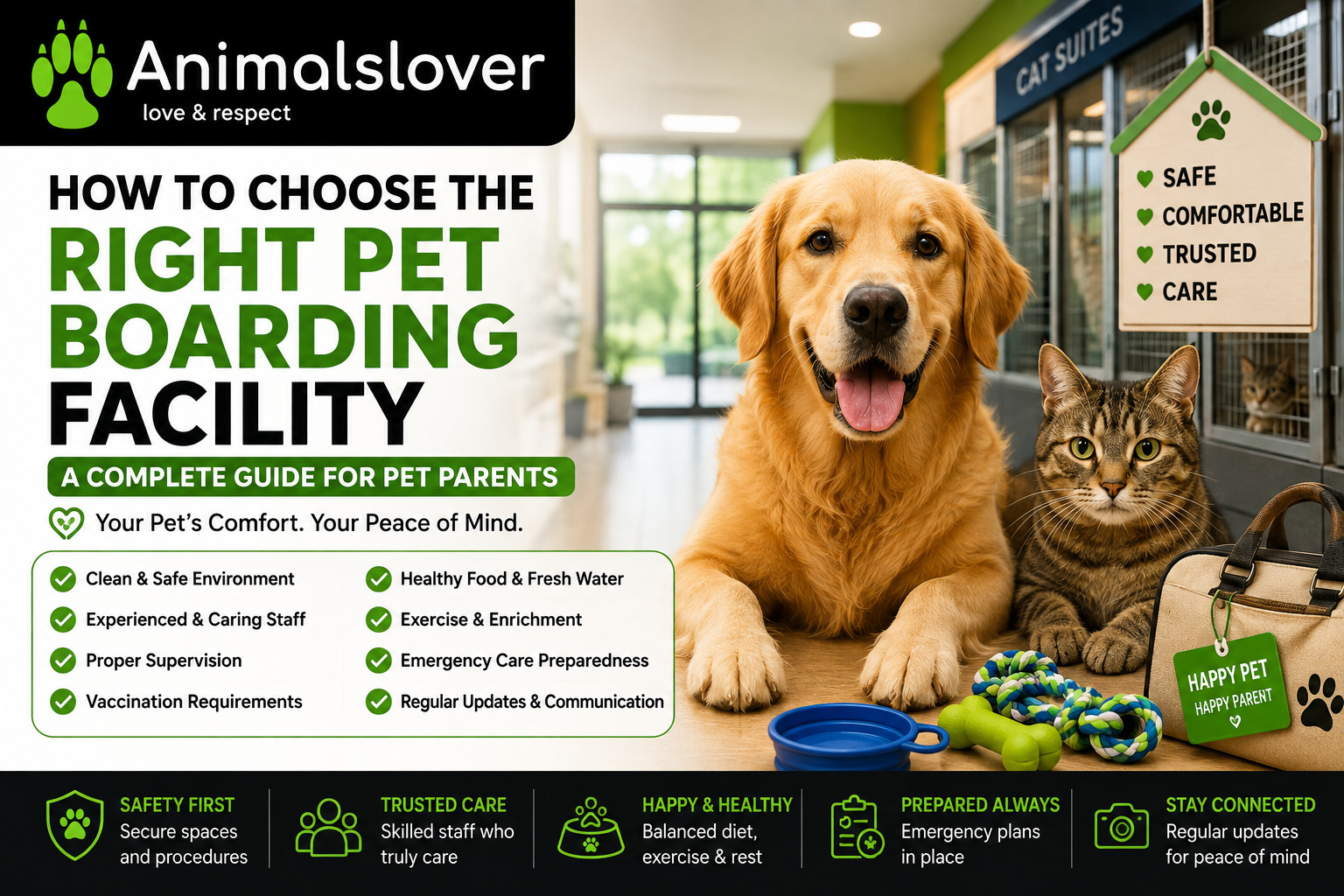
How to Choose the Right Pet Boarding Facility: A Complete Guide for Dog and Cat Parents
19 Aug 2026
Learn how to choose a safe pet boarding facility with tips on cleanliness, staff, supervision, vaccinations, emergency care, food, exercise, and what to ask before booking.
Leaving your pet behind when you travel, attend an important event, or deal with an unexpected situation can be stressful.
For many pet parents, the biggest question is simple:
Who will take care of my pet when I can't?
A good pet boarding facility can provide a safe, comfortable place for your dog or cat while you're away. But not every boarding facility offers the same level of care. Some focus on basic accommodation, while others provide supervised play, grooming, enrichment, medication support, individual attention, and veterinary coordination.
Choosing the right facility therefore requires more than checking the price or looking at a few photos online.
You need to consider your pet's personality, health, routine, comfort level, and specific needs.
This guide explains what to look for in a pet boarding facility, which questions to ask before booking, what to pack, and how to make the experience easier for your pet.
What Is Pet Boarding?
Pet boarding is a temporary care service where a pet stays at a dedicated facility while the owner is away.
Depending on the facility, services may include:
- Overnight accommodation
- Feeding
- Fresh water
- Exercise
- Supervised play
- Basic grooming
- Medication administration
- Individual attention
- Pet monitoring
- Cleaning and sanitation
- Emergency veterinary coordination
Some facilities specialize in dogs, while others accommodate both dogs and cats.
There are also different types of boarding arrangements, including traditional kennels, pet hotels, home-style boarding, and specialized facilities offering additional pet-care services.
The right option depends on your pet and the level of care they require.
Why Choosing the Right Boarding Facility Matters
A boarding facility temporarily becomes part of your pet's daily environment.
Your pet may experience:
- A new location
- Different people
- New sounds and smells
- Changes in routine
- Interaction with unfamiliar animals
- Different sleeping arrangements
- A temporary separation from their family
For some pets, this is easy.
For others, it can be stressful.
A well-managed facility should therefore focus not only on keeping pets physically safe but also on providing appropriate routines, supervision, cleanliness, comfort, and enrichment.
The goal should be more than simply giving your pet a place to stay.
The goal is to provide responsible care while you are away.
1. Visit the Facility Before Booking
One of the best ways to evaluate a boarding facility is to visit it personally.
Photos and videos can be useful, but they don't always tell you what a facility is actually like.
During your visit, pay attention to:
- Overall cleanliness
- Odors
- Noise levels
- Ventilation
- Temperature
- Sleeping areas
- Outdoor spaces
- Play areas
- Food preparation areas
- Water availability
- Staff behavior
- How animals are handled
Ask whether visitors are allowed to see the areas where pets actually stay.
If a facility refuses reasonable questions or doesn't allow you to understand where your pet will be accommodated, consider that a warning sign.
What should a good facility feel like?
It doesn't have to look luxurious.
Instead, it should appear:
- Clean
- Organized
- Secure
- Well-maintained
- Properly supervised
- Designed around animal safety
A simple but well-managed facility can be a better choice than a visually impressive facility with poor care practices.
2. Ask About Staff Supervision
One of the most important questions is:
Who is watching the animals, and when?
Ask about staffing throughout the day and night.
Find out:
- How many staff members are typically present?
- Are animals supervised during play?
- What happens overnight?
- How often are pets checked?
- Who handles emergencies?
- Are staff trained in basic animal care?
- How are fights or conflicts between animals handled?
Don't assume that a facility is continuously staffed simply because it advertises 24-hour boarding.
Ask for a clear explanation of its supervision system.
3. Check the Cleanliness and Hygiene Standards
Cleanliness is extremely important when multiple animals share a facility.
Ask how frequently:
- Sleeping areas are cleaned
- Floors are disinfected
- Food bowls are washed
- Water bowls are refreshed
- Litter boxes are cleaned
- Waste is removed
- Bedding is changed
For cats, litter-box hygiene is particularly important.
For dogs, outdoor and indoor areas should be cleaned regularly to reduce unpleasant odors and contamination.
A facility should also have procedures for dealing with pets that develop vomiting, diarrhea, coughing, skin problems, or other signs of illness.
Separate sick animals when necessary
Ask what happens if a pet becomes unwell during boarding.
A responsible facility should have a clear process for reducing contact between potentially sick animals and healthy pets.
4. Ask About Vaccination Requirements
Because boarding facilities may accommodate multiple animals, vaccination policies are an important part of disease-risk management.
Ask the facility:
- Which vaccinations are required?
- Are vaccination records checked?
- Are puppies and kittens accepted?
- Are unvaccinated pets allowed?
- What happens if a pet's vaccination expires during a stay?
Requirements can vary between facilities and may depend on the species and local veterinary recommendations.
If your pet's vaccinations are not up to date, discuss the appropriate schedule with your veterinarian before boarding.
Don't simply hide missing records to get a booking.
Your pet's health and the health of other animals matter.
5. Understand How Dogs and Cats Are Housed
Dogs and cats have different environmental needs.
A facility that is excellent for dogs may not necessarily be ideal for cats.
For dogs
Ask about:
- Individual sleeping spaces
- Exercise schedules
- Outdoor access
- Supervised group play
- Individual play options
- Separation of dogs by size or temperament
- Rest periods
Not every dog enjoys group play.
Some dogs are happier with individual exercise and quiet time.
For cats
Ask whether cats have:
- Separate accommodation away from dogs
- Comfortable resting areas
- Hiding spaces
- Clean litter boxes
- Appropriate vertical space
- Quiet surroundings
- Individual attention
Cats can be particularly sensitive to environmental changes, so a calm and secure setting can make boarding easier.
6. Make Sure the Facility Understands Your Pet's Personality
Your pet's personality matters as much as their breed or size.
Before booking, tell the staff whether your pet:
- Is nervous around strangers
- Is comfortable with other dogs
- Doesn't like cats
- Guards food
- Has separation anxiety
- Is reactive on a leash
- Is elderly
- Is very energetic
- Prefers quiet environments
- Has previously stayed at a boarding facility
Don't exaggerate your pet's friendliness just because you want them accepted.
Accurate information helps staff make safer decisions.
For example, a highly social dog may enjoy supervised play, while a nervous dog may need individual activities and more quiet time.
7. Ask About Feeding
Your pet's food routine should remain as consistent as reasonably possible.
Ask:
- Can I provide my pet's normal food?
- How many meals are provided?
- Are treats allowed?
- Can staff follow specific feeding instructions?
- Are food allergies documented?
- How are food bowls cleaned?
- What happens if my pet refuses to eat?
If your pet has dietary restrictions, provide clear written instructions.
Avoid changing food immediately before boarding unless there is a specific reason.
A sudden diet change combined with the stress of a new environment can make digestive problems more likely.
8. Ask Whether Medication Can Be Administered
If your pet takes medication, confirm this before making the booking.
Ask:
- Can staff administer medication?
- Is there an additional charge?
- How should medication be labeled?
- What happens if a dose is missed?
- Who records medication administration?
- Can injectable medication be handled if required?
Provide written instructions and the medication in its original packaging whenever possible.
Never assume that a boarding facility can provide medical care simply because it accepts pets with routine medication needs.
For pets with complex medical conditions, a veterinary boarding facility or another arrangement recommended by your veterinarian may be more appropriate.
9. Understand the Emergency Plan
This is one of the most important parts of your evaluation.
Ask:
"What happens if my pet becomes seriously ill or injured while staying here?"
A good facility should have a clear answer.
Find out:
- Which veterinarian they work with
- Whether an emergency clinic is nearby
- Who transports pets during emergencies
- How owners are contacted
- What authorization is required
- How emergency expenses are handled
Give the facility your current contact information and an emergency contact who can make decisions if you cannot be reached.
Don't leave emergency information incomplete
Before your pet stays, provide:
- Your phone number
- Backup contact
- Veterinarian's contact details
- Important medical history
- Medication information
- Allergy information
- Emergency authorization details
This can save valuable time if something unexpected happens.
10. Ask About Exercise and Enrichment
Boarding shouldn't mean your pet spends the entire day in a small enclosure without stimulation.
Ask what the daily routine looks like.
For dogs, this may include:
- Walks
- Outdoor time
- Supervised play
- Individual activities
- Training games
For cats, enrichment may include:
- Interactive toys
- Climbing opportunities
- Hiding areas
- Individual play
- Human interaction
The amount of activity should be appropriate for your pet's age, health, breed, and personality.
A senior dog, for example, may need shorter and gentler activity than a young high-energy dog.
11. Check the Security of the Facility
Pets can escape when doors, gates, or handling procedures are inadequate.
Look at:
- Entrance gates
- Fencing
- Doors
- Windows
- Kennel locks
- Pet handover procedures
- Identification systems
Ask how staff prevent one pet from accidentally entering another pet's space.
Also ask what happens during cleaning, feeding, walking, and transferring animals between areas.
A secure facility should have clear procedures rather than relying only on staff attention.
12. Ask About Daily Updates
Many pet parents feel more comfortable when they receive updates while they are away.
Depending on the facility, updates may include:
- Photos
- Short videos
- Feeding updates
- Activity updates
- Bathroom updates
- General behavior notes
Regular updates can be reassuring, but don't choose a facility solely because it sends attractive photos.
A cute photo is not proof of good care.
Prioritize safety, supervision, hygiene, staff quality, and emergency preparedness.
13. Understand the Full Cost
Price is an important consideration, but the cheapest facility isn't automatically the best value.
Ask for a complete breakdown of charges.
Possible additional fees may apply for:
- Extra walks
- Individual play
- Grooming
- Medication
- Special food preparation
- Late pickup
- Holiday stays
- Transportation
- Additional cleaning
- Special accommodation
Ask:
"What is included in the standard boarding price, and what costs extra?"
Getting the full price in advance prevents unpleasant surprises later.
14. Read Reviews Carefully
Online reviews can provide useful information, but don't rely on ratings alone.
Look for repeated comments about:
- Cleanliness
- Staff communication
- Pet safety
- Handling
- Feeding
- Emergency response
- Condition of animals
- Billing transparency
Pay attention to patterns rather than one unusually positive or negative review.
If several unrelated customers mention the same problem, investigate it further.
15. Do a Short Trial Stay
If your pet has never boarded before, consider a shorter trial stay before a long vacation.
For example, you might choose a:
daycare visit → short overnight stay → longer boarding period
This allows you to see how your pet reacts.
After the stay, ask the facility:
- Did my pet eat normally?
- Did they drink water?
- Did they interact with staff?
- Were they comfortable around other animals?
- Did they sleep?
- Did they show signs of stress?
- Did anything unusual happen?
This information can help you decide whether the facility is suitable for a longer stay.
What to Pack for Pet Boarding
Before dropping your pet off, prepare a simple boarding kit.
For dogs
- Regular food
- Treats if permitted
- Leash
- Collar or harness
- Identification information
- Medication
- Feeding instructions
- Comfort item
- Emergency contact details
- Veterinary information
For cats
- Regular food
- Treats if permitted
- Medication
- Familiar blanket or comfort item
- Identification information
- Feeding instructions
- Veterinary details
- Emergency contact information
Ask the facility what items it provides so you don't pack unnecessary things.
How to Make Boarding Less Stressful
Your behavior can affect your pet's experience.
Try to keep the process calm and predictable.
Don't make a dramatic goodbye
Long emotional goodbyes can sometimes increase anxiety.
Keep the handover calm and confident.
Bring something familiar
A familiar blanket or approved toy can provide a comforting scent.
Keep the routine familiar
Provide the facility with your pet's usual feeding and medication schedule.
Don't make major changes immediately before boarding
Avoid unnecessary changes to:
- Food
- Routine
- Sleeping arrangements
- Training
- Medication schedules
unless your veterinarian recommends them.
Pet Boarding Red Flags to Watch For
Be cautious if a facility:
- Refuses reasonable questions
- Has poor hygiene
- Cannot explain its emergency procedure
- Has unsecured entrances
- Doesn't properly record pet information
- Cannot explain how animals are supervised
- Has no clear illness-management procedure
- Makes unrealistic promises
- Hides additional charges
- Pressures you to book immediately
- Dismisses your concerns about your pet
You don't need a luxury facility.
You need a responsible and transparent one.
Pet Boarding vs Pet Sitter: Which Is Better?
Boarding isn't the only option.
A pet sitter may be better for animals that become very stressed when their environment changes.
A sitter can care for the pet:
- At your home
- At the sitter's home
- Through scheduled visits
Boarding may be more convenient when:
- You need overnight supervision
- Your home isn't suitable for a sitter
- Your pet enjoys social environments
- You want structured care
- You need additional services
The best choice depends on the individual pet.
For a highly anxious cat, staying at home with a trusted sitter may be less stressful than moving to a boarding facility.
For a social, confident dog, a well-run boarding facility may be perfectly suitable.
Frequently Asked Questions
How do I choose a good pet boarding facility?
Visit the facility, evaluate cleanliness and security, ask about staff supervision, vaccination requirements, feeding, exercise, medication, emergency procedures, and pricing. Most importantly, choose a facility that matches your pet's individual needs.
Should I visit a boarding facility before booking?
Yes. A personal visit can help you evaluate the actual environment and ask questions that may not be answered by online photos or advertisements.
Is pet boarding safe for dogs?
A well-managed boarding facility can be a safe option, but safety depends on factors such as supervision, hygiene, security, animal compatibility, staff training, and emergency preparedness.
Is boarding stressful for cats?
Some cats may find boarding stressful because they are sensitive to changes in their environment. A quiet, cat-specific accommodation with hiding areas and appropriate enrichment may help reduce stress.
Should I leave my pet's regular food at boarding?
If the facility allows it, keeping your pet on its familiar diet can help maintain routine. Provide clear feeding instructions and disclose allergies or dietary restrictions.
Can pet boarding facilities give medication?
Some facilities can administer routine medications, but policies vary. Confirm this before booking and provide clear written instructions.
How long can a pet stay at a boarding facility?
The appropriate length depends on the pet, facility, health needs, and quality of care. For longer stays, regular updates and a clear emergency plan become especially important.
What if my pet gets sick while boarding?
Ask the facility about its veterinary and emergency procedures before booking. Provide your veterinarian's information and an emergency contact who can make decisions if you cannot be reached.
Conclusion
Choosing a pet boarding facility is ultimately about finding the right combination of safety, cleanliness, supervision, communication, and individualized care.
Don't choose a facility simply because it has the best photos or the lowest price.
Visit it.
Ask questions.
Understand the daily routine.
Check the emergency plan.
Tell staff honestly about your pet's personality and health needs.
And whenever possible, give your pet a short trial stay before leaving them for an extended period.
Every pet is different. A confident dog may love a social boarding environment, while a nervous cat may be much happier staying at home with a trusted caregiver.
The best boarding arrangement is therefore not necessarily the most expensive one.
It's the one where your pet's specific needs are understood and responsibly cared for.
Choose Better Pet Care With AnimalsLover
At AnimalsLover, we believe pet care should be built around trust, safety, responsible handling, and the individual needs of every animal.
From pet-care education and grooming to boarding and modern pet services, our goal is to make it easier for pet parents to make informed decisions.
Before your next trip, take the time to choose care you can genuinely feel comfortable leaving your companion with.
Because when you can't be there, your pet still deserves the care, attention, and respect they depend on every day.
This article is for general educational purposes. Boarding requirements, vaccination policies, and veterinary procedures can vary by facility and location. For pets with significant medical or behavioral needs, consult your veterinarian when deciding on the most appropriate care arrangement.
🐾 Did you enjoy this article?
Explore more pet care tips, breed guides and expert advice on our blog. For pet-related questions, contact our team.