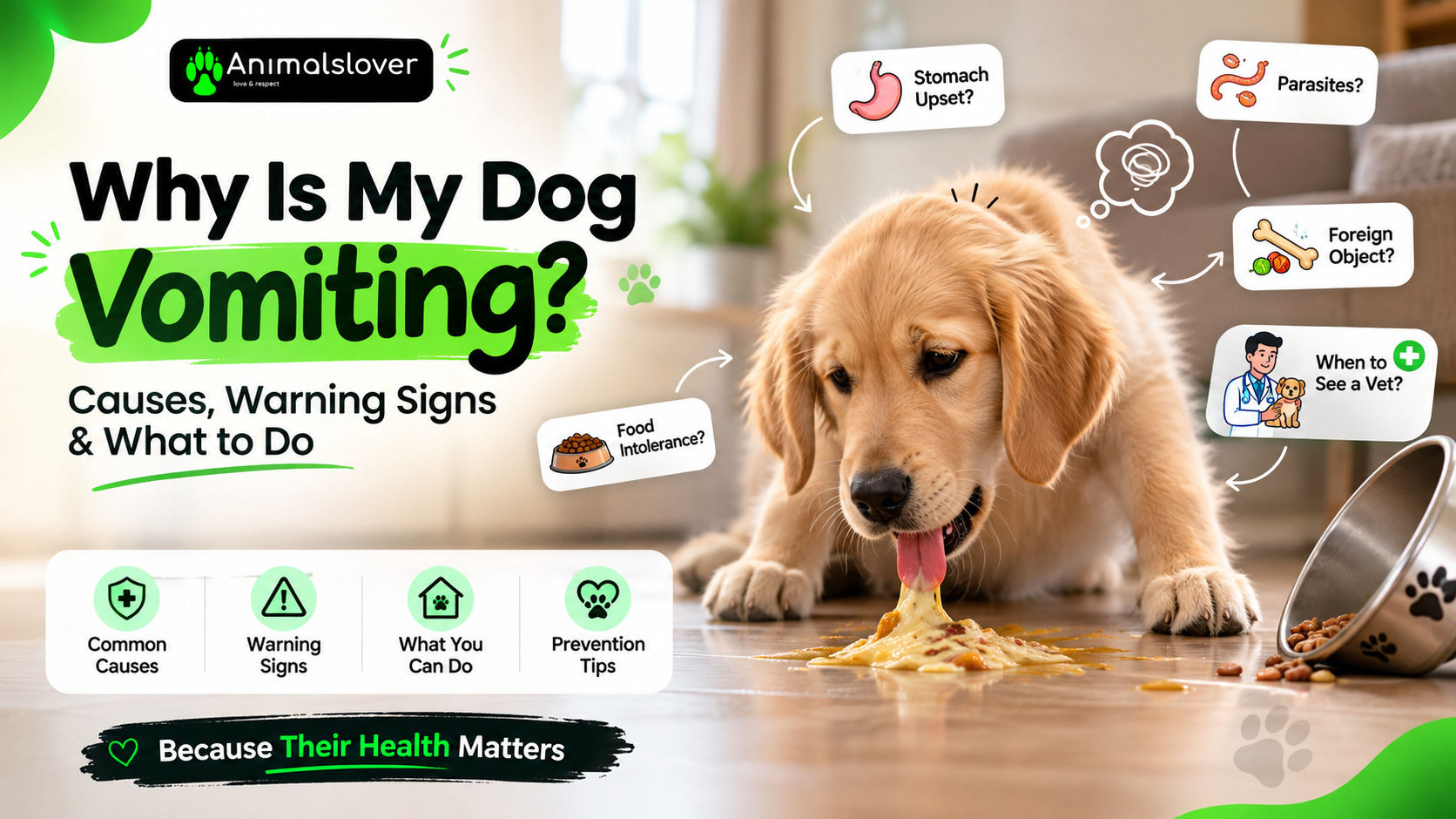
Why Is My Dog Vomiting? Causes, Warning Signs & What to Do
12 Aug 2026
Is your dog vomiting? Learn the common causes of vomiting in dogs, warning signs to watch for, what you can do at home, and when your dog needs veterinary care.
Seeing your dog vomit can be worrying, especially when you are not sure whether it is something minor or a sign of a bigger health problem.
The good news is that one occasional episode of vomiting in an otherwise healthy, active dog may not always be an emergency. Dogs can vomit after eating something unusual, eating too quickly, or getting into food they should not have eaten. However, repeated vomiting or vomiting accompanied by other symptoms can indicate a more serious problem.
So, why is your dog vomiting?
There are many possible reasons, ranging from a simple stomach upset to infections, parasites, pancreatitis, poisoning, or an intestinal blockage. Understanding the possible causes and knowing the warning signs can help you decide when your dog needs veterinary attention.
What Does Vomiting Look Like in Dogs?
Vomiting is an active process. A dog may appear nauseous beforehand, lick its lips, drool, swallow repeatedly, retch, and contract its abdominal muscles before bringing up food or fluid.
It is also important to distinguish vomiting from regurgitation.
Regurgitation is usually more passive and often happens shortly after eating or drinking. The food may look largely undigested because it has not passed through the stomach in the same way.
This difference can be useful information for your veterinarian.
Common Reasons Why Dogs Vomit
1. Eating Something They Shouldn't
Dogs are naturally curious and often investigate the world with their mouths. They may eat garbage, spoiled food, plants, insects, table scraps, or other inappropriate objects.
This is commonly called dietary indiscretion and can cause temporary stomach irritation. Some dogs may vomit once or twice and then return to normal.
2. Eating Too Quickly
Some dogs practically inhale their meals.
Eating too quickly can upset the digestive system and may cause vomiting or regurgitation soon after eating. Using appropriate slow-feeding methods may help some dogs that regularly eat too fast.
3. Sudden Food Changes
Changing your dog's food suddenly can upset its digestive system.
When introducing a new diet, a gradual transition is generally better than changing foods overnight. Sudden dietary changes are recognized as a possible cause of digestive upset.
4. Parasites
Intestinal parasites can cause vomiting, diarrhea, appetite changes and other digestive problems.
Parasites are particularly important to consider in puppies and dogs that have exposure to contaminated environments. A veterinarian can perform appropriate testing and recommend treatment when needed.
5. Stomach or Intestinal Inflammation
Gastroenteritis or gastritis can cause vomiting when the stomach or intestines become irritated or inflamed.
Possible triggers include infections, parasites, certain medications, irritating substances, or inappropriate food.
6. Pancreatitis
Pancreatitis, or inflammation of the pancreas, can also cause vomiting.
Dogs with pancreatitis may have additional symptoms such as abdominal pain, reduced appetite, weakness, or diarrhea. Because pancreatitis can be serious, persistent vomiting or vomiting accompanied by these symptoms should not be ignored.
7. Swallowing a Foreign Object
This is one of the more serious possibilities.
Dogs may swallow socks, bones, toys, pieces of plastic, string, or other objects. If an object becomes lodged in the digestive tract, it can cause an intestinal obstruction and repeated vomiting.
A suspected swallowed object should be treated as a veterinary concern rather than something to simply monitor at home.
8. Poisoning or Toxic Substances
Certain foods, chemicals, medications, plants, and other substances can be dangerous to dogs.
If you believe your dog has eaten something poisonous, contact a veterinarian or emergency veterinary service immediately. Do not attempt to make your dog vomit unless a veterinarian specifically tells you to do so, because inducing vomiting can be dangerous in some poisoning or foreign-object situations.
9. Other Health Problems
Vomiting is not always caused by a problem in the stomach itself.
Kidney disease, liver disease, hormonal disorders, certain infections, and other systemic conditions can also cause vomiting.
That is why recurring vomiting should not simply be assumed to be a "sensitive stomach."
When Is Dog Vomiting an Emergency?
The most important question is not just "Did my dog vomit?" but also "How is my dog behaving now?"
A dog that vomits once but remains bright, alert, comfortable, and interested in normal activities may sometimes be monitored closely.
However, veterinary attention is more important when vomiting is repeated or occurs together with other concerning symptoms.
Contact a veterinarian promptly if your dog:
- Vomits repeatedly
- Cannot keep water down
- Has blood in the vomit
- Has significant diarrhea
- Appears weak, very tired, or unusually quiet
- Has abdominal pain
- Refuses food
- Shows signs of dehydration
- Is losing weight
- Has a fever
- May have swallowed a foreign object
- May have eaten a poisonous substance
Repeated vomiting can cause dehydration and electrolyte imbalances, especially when the dog cannot keep fluids down.
Get urgent veterinary help when your dog looks seriously ill
Extreme lethargy, severe or constant pain, difficulty breathing, very pale or bluish gums, seizures, heavy bleeding, or other signs of severe illness require immediate veterinary attention.
What Should You Do When Your Dog Vomits?
First, try not to panic.
If your dog has vomited once and otherwise appears normal, observe closely for changes in behavior and additional vomiting.
Make a note of:
How many times did your dog vomit?
What did the vomit look like?
Was it mostly food, liquid, foam, bile, or something unusual?
When did it happen?
Was it immediately after eating or several hours later?
Did your dog eat anything unusual?
Think about garbage, treats, plants, toys, bones, chemicals, or human food.
Are there other symptoms?
Check for diarrhea, weakness, abdominal discomfort, loss of appetite, coughing, or changes in drinking.
This information can be extremely useful when speaking with a veterinarian.
Should You Give Your Dog Food or Water After Vomiting?
This is where many pet owners accidentally make mistakes.
Do not force food or large amounts of water immediately after repeated vomiting.
At the same time, do not completely withhold water without veterinary guidance, because vomiting can contribute to dehydration. The MSD Veterinary Manual specifically warns that withholding water can worsen dehydration unless fluids are being provided under veterinary care.
For a dog that has vomited, the safest approach depends on the dog's age, health, frequency of vomiting, and suspected cause. A veterinarian can provide individualized instructions.
Puppies, senior dogs, and dogs with underlying health conditions may need particularly careful assessment.
What About Home Remedies?
You may find many home remedies online for dog vomiting.
Be careful.
A remedy that is appropriate for one dog may be harmful to another, especially when the underlying cause is unknown.
Avoid giving human medications unless your veterinarian specifically recommends them. Likewise, do not intentionally induce vomiting unless instructed by a veterinary professional. Some swallowed substances can cause greater injury when brought back up.
How Do Veterinarians Find the Cause?
When vomiting is persistent, recurrent, severe, or associated with other symptoms, a veterinarian may perform a physical examination and ask detailed questions about your dog's diet, recent activities, medications, and possible exposure to toxins or foreign objects.
Depending on the situation, testing can include blood, urine, fecal testing, X-rays, ultrasound, or other diagnostic procedures. X-rays can be particularly useful when a foreign object or other serious gastrointestinal problem is suspected.
The goal is not simply to stop the vomiting. The important step is identifying and treating the underlying cause.
How Can You Reduce the Risk of Vomiting?
You cannot prevent every episode of vomiting, but several habits can reduce some common risks.
Feed a consistent diet
Avoid making sudden changes to your dog's food.
Keep harmful items away
Store medicines, chemicals, toxic foods, and small objects where your dog cannot reach them.
Watch what your dog picks up
Especially outdoors, dogs may swallow objects that can irritate the stomach or cause blockages.
Maintain parasite prevention
Talk to your veterinarian about an appropriate parasite-control plan for your dog's age and lifestyle.
Feed appropriately
Avoid excessive table scraps and very large meals.
Schedule regular veterinary care
Routine veterinary visits can help detect problems early, particularly in puppies, senior dogs, and dogs with existing health concerns.
Frequently Asked Questions
Is it normal for a dog to vomit once?
One isolated episode can happen in an otherwise healthy dog and may not indicate a serious problem. However, continue observing your dog for additional vomiting or other symptoms.
Why is my dog vomiting yellow liquid?
Yellow material may contain bile, but the color alone cannot tell you exactly why your dog is vomiting. The frequency of vomiting and your dog's other symptoms are more important when deciding whether veterinary care is needed.
Should I worry if my dog vomits and then acts normal?
A single episode followed by normal behavior is generally less concerning than repeated vomiting with weakness, pain, diarrhea, dehydration, or other symptoms. Still, monitor your dog closely.
What if my dog is vomiting blood?
Blood in vomit is a reason to contact a veterinarian promptly. The cause can range from irritation to more serious gastrointestinal problems.
Can I give my dog human medicine for vomiting?
Do not give human medication unless your veterinarian specifically tells you to use it. The correct treatment depends on the underlying cause.
When should I take my puppy to the vet for vomiting?
Puppies can become unwell quickly, particularly when vomiting is repeated or accompanied by diarrhea, weakness, poor appetite, or dehydration. Prompt veterinary advice is appropriate when a puppy is vomiting repeatedly or appears unwell.
Final Thoughts
Dog vomiting can be caused by something as simple as eating something unusual, but it can also be a warning sign of parasites, gastrointestinal disease, pancreatitis, poisoning, a foreign-body obstruction, or another medical condition.
The key is to look at the whole picture.
A single episode in a happy, active dog may be very different from repeated vomiting accompanied by blood, pain, weakness, dehydration, or loss of appetite.
When in doubt, contacting a veterinarian is the safest choice. Early attention can be especially important when the vomiting is persistent or another serious problem may be involved.
Take Care of Your Pet With AnimalsLover
At AnimalsLover, we believe pet care should not stop after bringing a pet home. From everyday care and grooming guidance to pet services and health-support resources, our goal is to help pet parents make better-informed decisions throughout their pet's life.
Have questions about your dog's health or everyday care? Explore AnimalsLover for more helpful pet-care guides and support.
This article is for general educational purposes and is not a substitute for veterinary diagnosis or treatment. For persistent, severe, or concerning vomiting, consult a qualified veterinarian.
🐾 Did you enjoy this article?
Explore more pet care tips, breed guides and expert advice on our blog. For pet-related questions, contact our team.