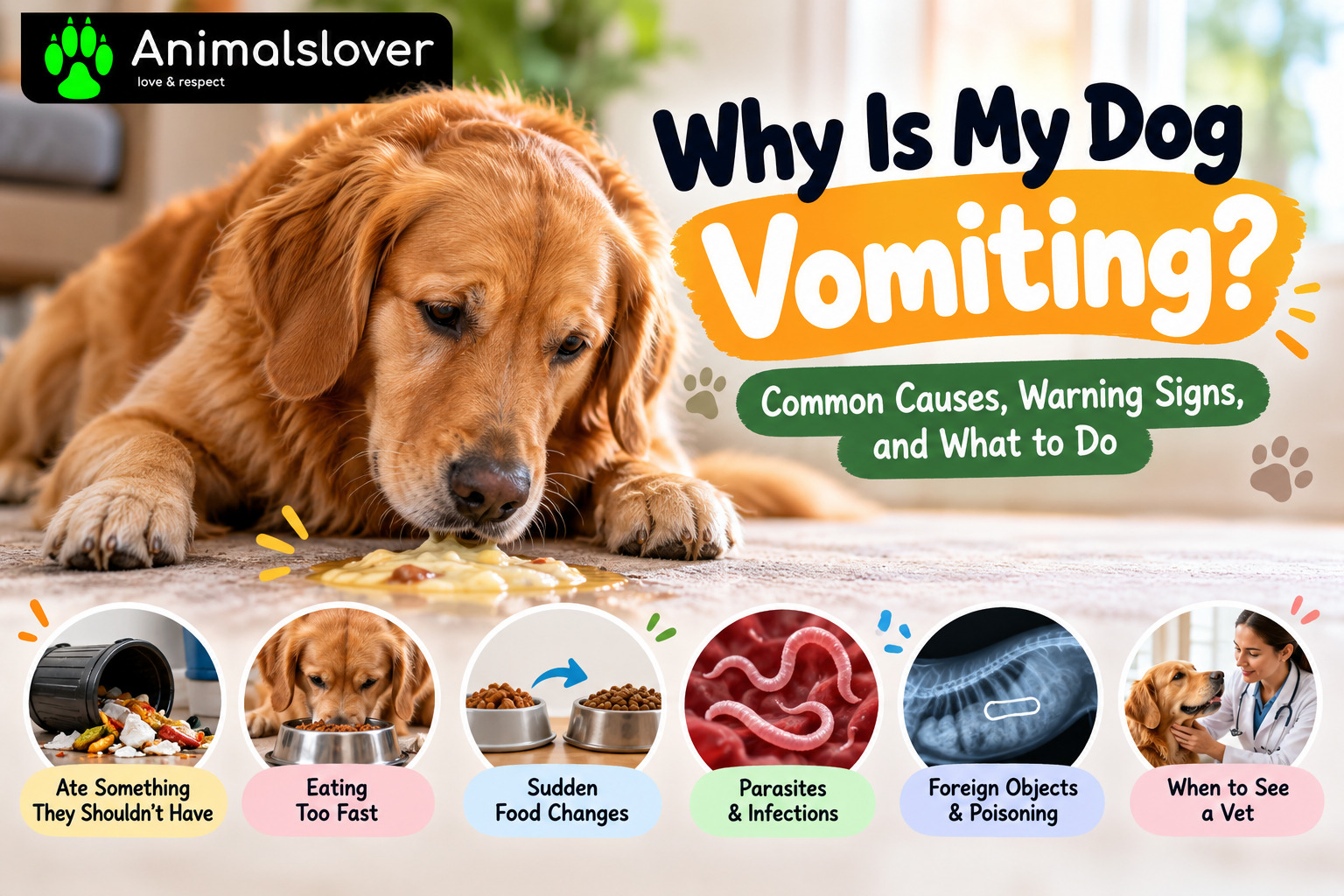
Why Is My Dog Vomiting? Causes, Warning Signs & What to Do
27 Sept 2026
Why Is My Dog Vomiting? Causes, Warning Signs & What to Do Meta Description: Is your dog vomiting? Learn the common causes of dog vomiting, warning signs to watch for, what you can do at home, and when to call a veterinarian.
Why Is My Dog Vomiting?
Seeing your dog vomit can be frightening. Even if your dog seems completely fine afterward, it is natural to wonder, “Why did this happen? Is something wrong?”
The truth is that dogs can vomit for many different reasons. Sometimes it is something relatively simple, such as eating too quickly, eating something unusual, or suddenly changing their food. But vomiting can also happen because of parasites, infections, pancreatitis, poisoning, or even an intestinal blockage.
So, the important thing is not just to notice that your dog vomited. You also need to look at how often it is happening, what your dog vomited, and how your dog is behaving afterward.
Let's take a closer look at the common causes and the warning signs every dog parent should know.
What Does Vomiting Look Like in Dogs?
Vomiting is different from simply bringing food back up.
When a dog vomits, it is usually an active process. You may notice your dog looking uncomfortable beforehand, licking its lips, drooling, swallowing repeatedly, or trying to retch before the stomach contents come out.
Regurgitation is different. It is usually more passive and often happens soon after eating. Food may come back up looking fairly undigested, without much warning.
This difference may sound small, but it can actually be useful information for your veterinarian.
Why Do Dogs Vomit?
There is no single reason why a dog vomits. Here are some of the more common possibilities.
1. Your Dog Ate Something It Shouldn't Have
Dogs investigate the world with their noses and mouths, and sometimes that gets them into trouble.
Garbage, spoiled food, table scraps, grass, plants, bones, insects, plastic, and other objects can irritate the stomach.
For example, your dog might grab something from the kitchen floor, eat it quickly, and vomit a little later.
If it happens once and your dog quickly goes back to normal, it may not always be an emergency. But repeated vomiting is a different story and should not simply be ignored.
2. Eating Too Fast
Some dogs act as though every meal is their last.
They gulp their food down in seconds, barely chewing. Eating this quickly can contribute to vomiting or regurgitation, particularly soon after a meal.
For dogs that regularly eat too fast, a slow-feeder bowl or another suitable feeding method may help them eat at a slower pace.
3. A Sudden Change in Food
Dogs can have sensitive stomachs, especially when their usual diet is changed suddenly.
Changing from one food to another overnight may lead to digestive upset in some dogs.
When introducing a new food, a gradual transition is generally easier on the digestive system than making a sudden switch.
4. Parasites
Intestinal parasites can affect dogs of all ages, but puppies deserve particular attention.
Depending on the parasite and the severity of the problem, a dog may experience vomiting, diarrhea, poor appetite, weight loss, or other digestive symptoms.
Routine veterinary care and an appropriate parasite-prevention plan can help reduce these risks.
5. Stomach or Intestinal Problems
Sometimes vomiting is connected to inflammation or irritation in the digestive system.
This can happen for a number of reasons, including infections, parasites, inappropriate food, certain medications, or other gastrointestinal conditions.
If vomiting continues or your dog develops other symptoms, it is important to get professional veterinary advice rather than trying to guess the cause at home.
6. Pancreatitis
Pancreatitis means inflammation of the pancreas, and it can be a serious condition.
Dogs with pancreatitis may vomit and may also show signs such as reduced appetite, abdominal discomfort, weakness, or diarrhea.
Because the condition can become serious, a dog showing these types of symptoms should be assessed by a veterinarian.
7. Swallowing a Foreign Object
This is one of the situations dog parents should take seriously.
Dogs sometimes swallow things like socks, pieces of toys, plastic, string, bones, or other objects. The object can become stuck in the digestive tract and cause an obstruction.
Possible warning signs include repeated vomiting, refusing food, abdominal pain, weakness, and changes in normal behavior.
When you know or strongly suspect that your dog swallowed something unusual, contacting a veterinarian promptly is important.
8. Poisoning
Dogs can accidentally eat or lick substances that are dangerous for them.
Certain medications, household chemicals, toxic foods, plants, and other substances can cause poisoning.
When poisoning is suspected, don't wait to see whether your dog gets better on its own.
Contact a veterinarian or emergency veterinary service immediately.
Also, do not try to make your dog vomit unless a veterinary professional specifically instructs you to do so. In some situations, making a dog vomit can actually make the problem worse.
9. Other Medical Problems
Vomiting does not always mean there is a problem with the stomach itself.
Some liver, kidney, hormonal, infectious, and other medical conditions can also cause vomiting.
That is why recurring vomiting, especially when there is no obvious reason, deserves proper veterinary attention.
When Is Dog Vomiting a Reason to Worry?
Not every episode of vomiting means that your dog is seriously ill.
A healthy adult dog may sometimes vomit once and then return to normal. Even then, it is worth watching your dog carefully for changes.
The situation becomes more concerning when the vomiting keeps happening or is accompanied by other symptoms.
Contact your veterinarian promptly if your dog:
- Vomits repeatedly
- Cannot keep water down
- Has blood in the vomit
- Has severe or ongoing diarrhea
- Refuses to eat
- Becomes weak, unusually sleepy, or less responsive
- Shows signs of abdominal pain
- Appears dehydrated
- Is losing weight
- May have swallowed a foreign object
- May have eaten something toxic
Puppies, older dogs, and dogs with existing health problems may need closer monitoring because they can become unwell more quickly.
What Should You Do When Your Dog Vomits?
The first thing to do is stay calm and observe.
It can be tempting to immediately search for a home remedy, but before doing anything, try to understand what happened.
Think about:
What Did Your Dog Vomit?
Was it recently eaten food? Liquid? Foam? Grass? Or something that shouldn't have been there?
If possible, take note of what it looked like. This information can sometimes help your veterinarian.
How Many Times Has Your Dog Vomited?
One isolated episode is different from vomiting repeatedly over several hours.
Keep track of the frequency rather than simply assuming it will stop.
When Did It Happen?
Did your dog vomit immediately after eating? Or did it happen much later?
The timing can provide useful clues.
Could Your Dog Have Eaten Something Unusual?
Think about the last several hours.
Could your dog have gotten into the garbage, grabbed food from the table, chewed a toy, eaten a plant, or swallowed something outside?
How Is Your Dog Acting Now?
This is one of the most important things to watch.
Is your dog alert and behaving normally, or does it seem weak, uncomfortable, or unusually quiet?
Look for other changes such as diarrhea, loss of appetite, excessive thirst, abdominal discomfort, or unusual behavior.
Should You Give Food or Water After Vomiting?
Many pet parents immediately want to give their dog food or water. However, the right approach depends on the dog's age, health, how often it is vomiting, and what may be causing the problem.
Don't force your dog to eat immediately after vomiting.
Water is important because vomiting can contribute to dehydration, but allowing a dog to gulp down a large amount at once may trigger more vomiting in some situations.
When vomiting is repeated or your dog cannot keep fluids down, speak to a veterinarian rather than relying on home treatment.
Don't Give Human Medicines Without Veterinary Advice
This is an important one.
Never assume that a medicine that is safe for humans is automatically safe for dogs.
Giving the wrong medication, the wrong dose, or medication for the wrong condition can cause serious problems.
Before giving your dog any medicine for vomiting, contact your veterinarian and follow their advice.
What About Home Remedies?
You'll find plenty of advice online about what to give a vomiting dog.
The problem is that there is no single home remedy that is appropriate for every dog or every cause of vomiting.
For a mild stomach upset, the advice may be very different from what is needed for poisoning, pancreatitis, or an intestinal blockage.
Trying to induce vomiting can also be dangerous in some cases, particularly when a dog has swallowed a sharp object, certain chemicals, or a substance that can cause additional injury.
When you're unsure about the cause, professional advice is the safer option.
How Can You Help Prevent Vomiting?
You cannot prevent every episode of vomiting, but you can reduce some common risks.
Keep Food Changes Gradual
When changing your dog's diet, introduce the new food gradually instead of making a sudden switch.
Keep Dangerous Items Out of Reach
Store medicines, cleaning products, chemicals, toxic foods, and other harmful substances somewhere your dog cannot access them.
Be Careful About What Your Dog Picks Up
Don't let your dog regularly eat garbage, unknown plants, bones, or objects found outside.
Slow Down Fast Eaters
A slow-feeding bowl or another suitable feeding method may help dogs that regularly gulp down their meals.
Stay Up to Date With Preventive Care
Talk with your veterinarian about parasite prevention and routine health care that is appropriate for your dog.
Don't Skip Routine Vet Visits
Regular veterinary check-ups can help identify health problems before they become more serious.
How Will a Veterinarian Find Out Why Your Dog Is Vomiting?
When vomiting is persistent, severe, or accompanied by other symptoms, your veterinarian will usually start by asking questions and performing a physical examination.
You may be asked about:
- Your dog's normal diet
- Recent food changes
- Medications or supplements
- Recent activities
- Possible access to toxins
- Possible swallowing of objects
- Other symptoms you've noticed
Depending on the situation, the veterinarian may recommend tests such as blood work, urine or fecal testing, X-rays, ultrasound, or other diagnostic procedures.
The goal isn't simply to stop the vomiting.
The bigger goal is to find out why it is happening and treat the underlying problem.
Frequently Asked Questions
Is it normal for a dog to vomit once?
One isolated episode can happen, particularly if a dog has eaten too quickly or eaten something unusual. However, you should continue watching your dog for repeated vomiting or any other concerning symptoms.
Why is my dog vomiting yellow liquid?
Yellow vomit may contain bile, but the color alone cannot tell you exactly what is causing the vomiting. How often your dog is vomiting and whether other symptoms are present are also important.
My dog vomited but seems completely normal. What should I do?
Continue observing your dog closely. If it was a single episode and your dog is otherwise acting normally, eating and drinking normally, and showing no other concerning signs, monitor the situation. Contact your veterinarian if vomiting happens again or other symptoms appear.
What if there is blood in my dog's vomit?
Blood in vomit should be taken seriously. Contact your veterinarian promptly for advice and evaluation.
Can I give my dog medicine for vomiting?
Don't give human medication unless your veterinarian specifically recommends it for your dog.
When should I take my puppy to the vet for vomiting?
Puppies need careful monitoring. Contact a veterinarian promptly if a puppy vomits repeatedly, cannot keep fluids down, develops diarrhea, becomes weak, refuses food, or shows other worrying symptoms.
🐾 Did you enjoy this article?
Explore more pet care tips, breed guides and expert advice on our blog. For pet-related questions, contact our team.